
The Reality of Necessity Entrepreneurship for Lower-Income Women
Many women on the financial margins turn to “side hustles” to make ends meet, but these businesses are often scalable. Founders just need access and opportunity.
I met Princess on a flight from Atlanta to Memphis.
We struck up a conversation the way Southern women do, and within minutes she was showing me pictures of her grandbabies. There was a familiar warmth to her, the kind that is part of the fabric of my childhood, the warmth of women who kept something soft through the hardest seasons. Her essence led with what I am sure has long been her belief: that her lily is always there, in any valley.

to survive or to offset a cost of living that
keeps outrunning wages
When she learned I was an entrepreneur, her whole face lit up. She told me she once had a side hustle, a little floral shop that she operated from her home. “If nothing else,” she said, “I knew flowers.” Without the schooling for an office job and unwilling to stand all day in a factory, she used what she had. She arranged flowers, cleaned homes, sold Avon, and raised her children on it.
Then she said something that has stayed with me: “I never thought of it as a business. It was always more of a hustle. I had to use what I had to survive.”
Those days of survival are behind Princess now; she is a retired grandmother of two. But she is far from alone. Across the country, lower-income women are doing what she did, turning what they have into income, and for many, a side hustle is the only option left. Hustle culture is the common term, but hustle undersells it, making real work sound casual and temporary, something that needs no capital and earns no recognition.
These women deserve more than admiration. They deserve an honest accounting of what they face and a clear path to the resources that exist but stay out of reach.
The name we keep avoiding
Economists call what Princess did necessity entrepreneurship: starting a venture to survive or to offset a cost of living that keeps outrunning wages. When the paycheck no longer stretches, micro-business becomes the answer.
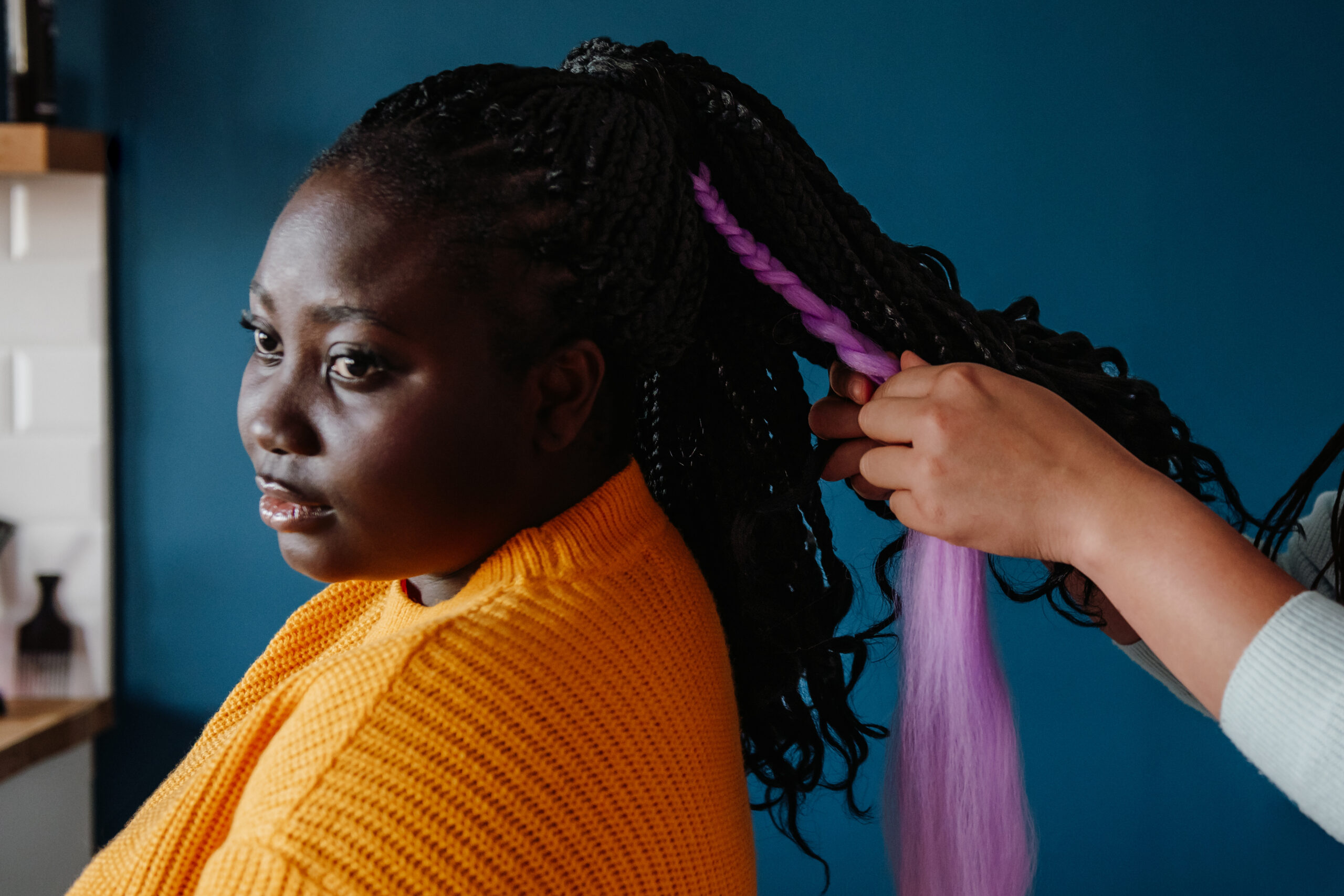
You already know these women, the ones piecing together income on the side, even if you have never called them business owners: the one retwisting locs on a Saturday and braiding hair after her shift; the one selling Friday plates on Facebook; the nail tech fitting clients in on her days off; the lash artist; the house cleaner; the baker taking orders by text whose kitchen is where you pick up your birthday cake or your Thanksgiving sweet potato pie; the seamstress doing alterations; the reseller flipping finds online; the driver delivering between school pickups.
These are livelihoods, and for a growing number of women, they are the line between making rent and missing it.
More women are pushed into this work every month, and the squeeze lands hardest at the bottom of the economic ladder. According to the National Employment Law Project, women, especially women of color, are an outsized share of the country’s lowest-paid workers. In 2025, as the labor market softened, real wages slipped for low-wage workers for the first time in years, even as rent and groceries kept climbing, the Economic Policy Institute found. The Institute for Women’s Policy Research reports that Black women, concentrated in the sectors that shed jobs first, absorbed the sharpest losses of all. When that shrinking paycheck disappears, the kitchen-table venture is what remains.
Business platform Gusto reported in 2025 that women now launch nearly half of all new businesses; for lower-income women, a venture is often the only door open. Women are already here, building from necessity.
Necessity is only a starting condition. Where it leads goes mostly unwritten.
Grit was never the missing piece. No one runs a business on a razor-thin margin for years without learning what works. What the work has lacked is structure.
Why this survival work is a wealth strategy
No one ever told Princess that what she built to survive is one of the most powerful wealth ladders we have.
The JPMorganChase Institute found that in 2019, the median net worth of a self-employed family was about $380,000, more than four times that of a typical family working for someone else (roughly $90,000). Ownership is one of the few levers that moves household wealth at that scale, and she can reach it.
And the payoff compounds beyond any one family. The Asset Funders Network has shown how, for low- and moderate-income women, ownership builds more than a paycheck: It can yield lasting assets she can save, borrow against, and pass on. Backing a woman like Princess is one of the most direct ways to move lower-income women into the middle class and beyond.
The returns extend into her whole household. According to the Harvard Kennedy School Center for International Development, women reinvest up to 90% of what they earn back into their families and communities, compared with 30-40% for men. A dollar that reaches her also reaches her children’s food, health, and schooling. Build an ecosystem around her — capital she can reach, mentorship, and networks — and then the household engine compounds.
The upside is large, yet, to Princess, it is a hustle, a means to take care of herself and her children. She calls it that because hustle is the only word she has been handed for it. In the academic literature, necessity entrepreneurship carries a pejorative reputation, written off as a story of capital constraints, narrow margins, and limited impact. Most entrepreneurs fund their start from personal savings, and lower-income founders begin with the thinnest cushions, since ownership has long skewed toward those who already hold wealth. Self-funding leads to underpricing, under-investing, and undercounting yourself.
Access is the gap. Women like Princess have proven their skill; what they lack is the bridge to the capital behind it.
Necessity entrepreneurship among lower-income women is an underfunded asset class, and the path to backing it is already paved. These women have already demonstrated the hardest part: They can build something from almost nothing and keep it alive through seasons that would shutter most businesses. That resilience is evidence that they are worth backing. Our job is to back the work they are already doing and put real resources behind the grit so often praised in the abstract. That means closing the access gap with three things that exist right now: capital they can reach, near-free digital tools, and intentional demand.
What can be implemented now: capital that actually makes sense
income on the side, even if you
have never called them business owners.
There is money for women like Princess. It sits with mission lenders rather than the banks that have already turned them away, and most of it is within reach.
Start with programs designed precisely for her situation. Grameen America was built for women entrepreneurs, including those living below the federal poverty line, and it requires no minimum credit score, no collateral, and no business income to qualify. It uses a group model: Women train together briefly, receive their first loans, and keep meeting to repay and learn. Critically, it reports to the credit bureaus, so she builds credit while building her business, and it has moved more than $7.4 billion to over 279,000 women.
Kiva offers crowdfunded loans up to $15,000 at 0%, with no credit-score requirement. The entrepreneur’s own community lends first, and those lenders often become customers. For businesses ready to scale, the Accion Opportunity Fund, a nonprofit whose borrowers are over 90% women, people of color, and lower-income earners, lends up to $250,000, weighs cash flow holistically, and coaches in English and Spanish.
These lenders decide who deserves a yes differently: Instead of a credit score and collateral the founder may not have, they weigh character, cash flow, and community. Mission Asset Fund goes furthest, formalizing the lending circle —the tanda or susu in which neighbors pool savings and lend to one another in turns — into a structured product. Its zero-interest circles report payments to the credit bureaus, lifting participants’ scores by an average of 168 points, and its microloans of up to $2,500 turn an informal neighborhood business into an official one. It gives the hustle a structure instead of a stigma.
Behind these sources of capital sits an infrastructure few people know exists. Community development financial institutions (CDFIs) are Treasury-certified nonprofits that serve borrowers banks turn away, with lower requirements and built-in coaching; find one near you at cdfifund.gov. And the Small Business Administration’s (SBA) microloan program provides loans up to $50,000 through nonprofit community lenders, aimed at women, low-income, veteran, and minority entrepreneurs. Wherever she lives, she can find an intermediary at sba.gov.
Grants exist too, money that never has to be repaid. Hello Alice, the National Association for the Self-Employed’s growth grants, and programs like digitalundivided put four- and five-figure awards into the hands of women and entrepreneurs of color. Through pitch competitions at the close of its training programs, Our Village United awards grant dollars too.
Lower-income women founders need to be invited into the conversation and into the resource rooms so they know what exists and how to reach it.
What can be implemented now: tools and free expertise
Launching a business online can cost less than $500. The back office that once required hired help is now free. Wave and Zoho Books handle invoicing, expense tracking, and basic reports, the clean books a lender will later ask to see. Free AI assistants like ChatGPT and Claude can handle work that used to require paying someone, such as drafting a product listing, answering a customer, or sorting the month’s expenses.
In practice, a card reader turns a cash-only table into a record a lender can read, and a free storefront turns a neighborhood name into a regional one. The discipline that separates getting by from building wealth is simple but non-negotiable: Know your margin, price for profit instead of apology, and document everything because the records you keep this year are the loan you unlock next year.
And the expertise is free. The SBA’s resource partners, including Women’s Business Centers, SCORE, and Small Business Development Centers, offer no-cost mentoring in nearly every community. Help with cash flow, pricing, and a loan application is there for the asking. The entrepreneur just has to know the door is there.
Women with “side hustles” deserve more than admiration. They deserve an honest accounting of what they face and a clear path to resources.
From hustle to structure
Grit was never the missing piece. No one runs a business on a razor-thin margin for years without learning what works. What the work has lacked is structure: the scaffolding that turns a venture built to survive into one built to compound.
The scaffolding is concrete, and every piece already exists: capital she can reach without collateral she does not have, credit built one reported loan at a time so the next dollar costs less, recordkeeping that turns a cash table into a balance sheet a lender or buyer can read, steady demand from neighbors and from institutions large enough to sign real contracts, and the mentorship and cooperative networks that turn one owner’s hard-won lesson into the block’s standard practice.
Assemble that structure, and survival can become scalable wealth. The talent was proven all along. The scaffolding was the missing piece.
Necessity entrepreneurship is one of our clearest opportunities — and one of the most overlooked. Millions of women are already on the first rung, with the skill, the customers, and the will. What turns survival into something steadier is the rest of us choosing to meet them there, with capital they can reach, tools that cost almost nothing, and steady demand.
So let’s invest. Let’s put real funding and resources behind the woman making a way out of no way. This is an investment, one of the smartest we can make in our families, our neighborhoods, and our shared future. These women are already doing the work. Let’s build an ecosystem around them.
Dr. Lakeysha “Key” Hallmon is a social entrepreneur and sought-after keynote speaker, leadership strategist, and author. She is also the founder of the Atlanta-based Village Market and Our Village United. Learn more at drkeyhallmon.com.
TALENT IS EVERYWHERE — OPPORTUNITY IS NOT.
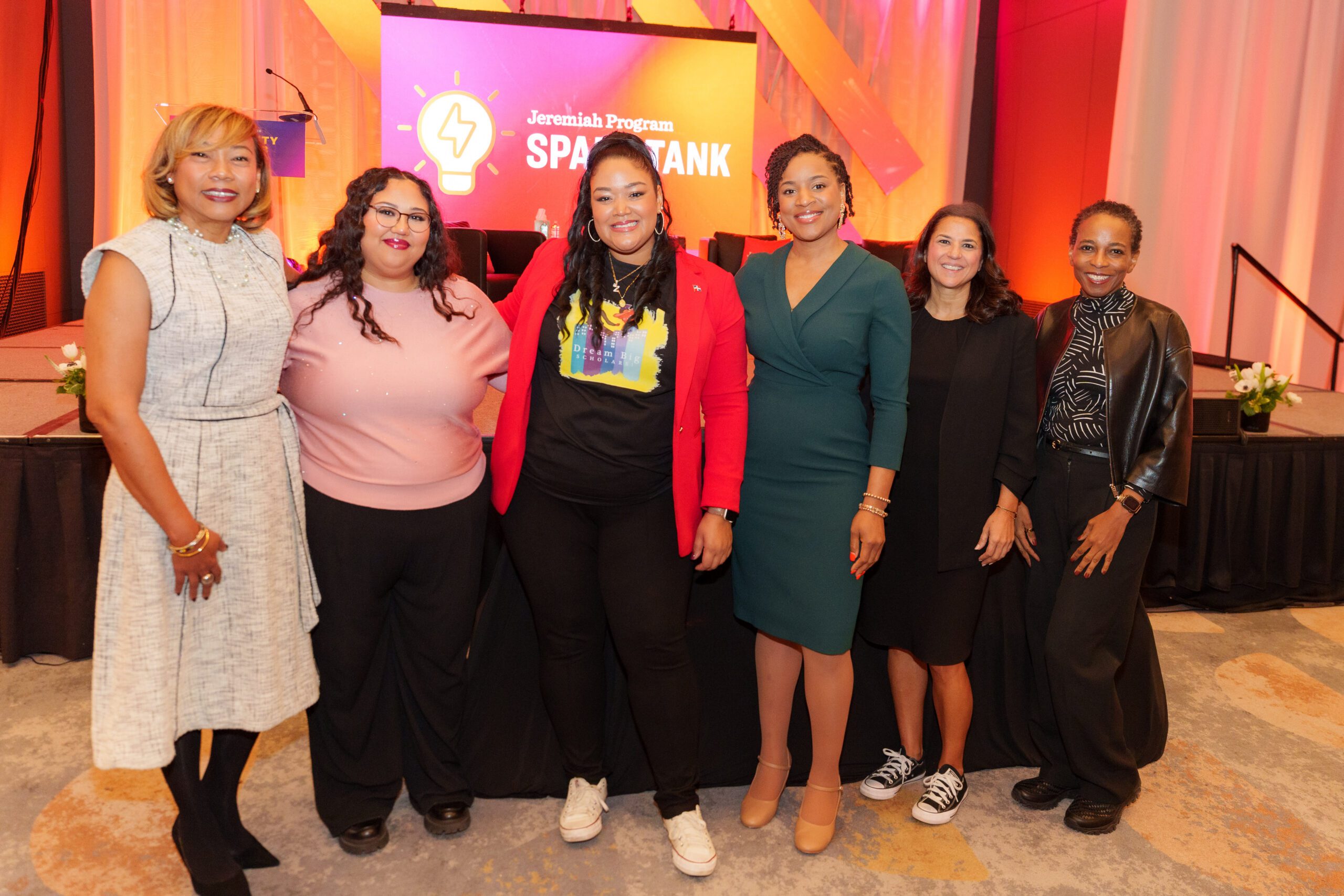
Since 2023, Jeremiah Program has invested over $80,000, along with coaching and development tools, in single mothers’ business ventures and dreams in our annual Spark Tank pitch competition.
As is so often the case with single mothers who become entrepreneurs, building a business is about more than making money; it’s a path to collective healing and community care.

Find this story and more in our magazine, Imagine!
When you design policies and structures that actually work for a single mom navigating child care, employment, and college simultaneously, you’ve built systems that work for everyone.
Those are the stories we’re telling in this fourth issue of Imagine.
Did this story resonate with you? A monthly gift goes further to support JP families.