

The Roots of Rising Utility Costs and the Impact on Families
AI data centers are only part of why bills are climbing — and we can collectively work toward solutions.
Americans are used to gasoline prices being a hot-button issue. But utility bills? Not so much. That was before household energy prices started to outpace inflation. Now, millions of Americans across the income spectrum are paying attention, and they do not like what they see.
A poll commissioned by the Center for American Progress in May found that 65% of American voters were worried about the cost of their utility bills. Even more, 70%, reported that they had changed their habits, limiting the use of heat and air conditioning beyond what was comfortable, to try to reduce costs. Voters have begun to demand lower costs, especially in states like Pennsylvania and Michigan that have experienced notable rate increases.
But few people, including those in power, understand why utility prices have skyrocketed over the past five years, much less what to do about it. This is especially true as data centers push the demand for electricity to unprecedented heights.
Our Complicated Energy System
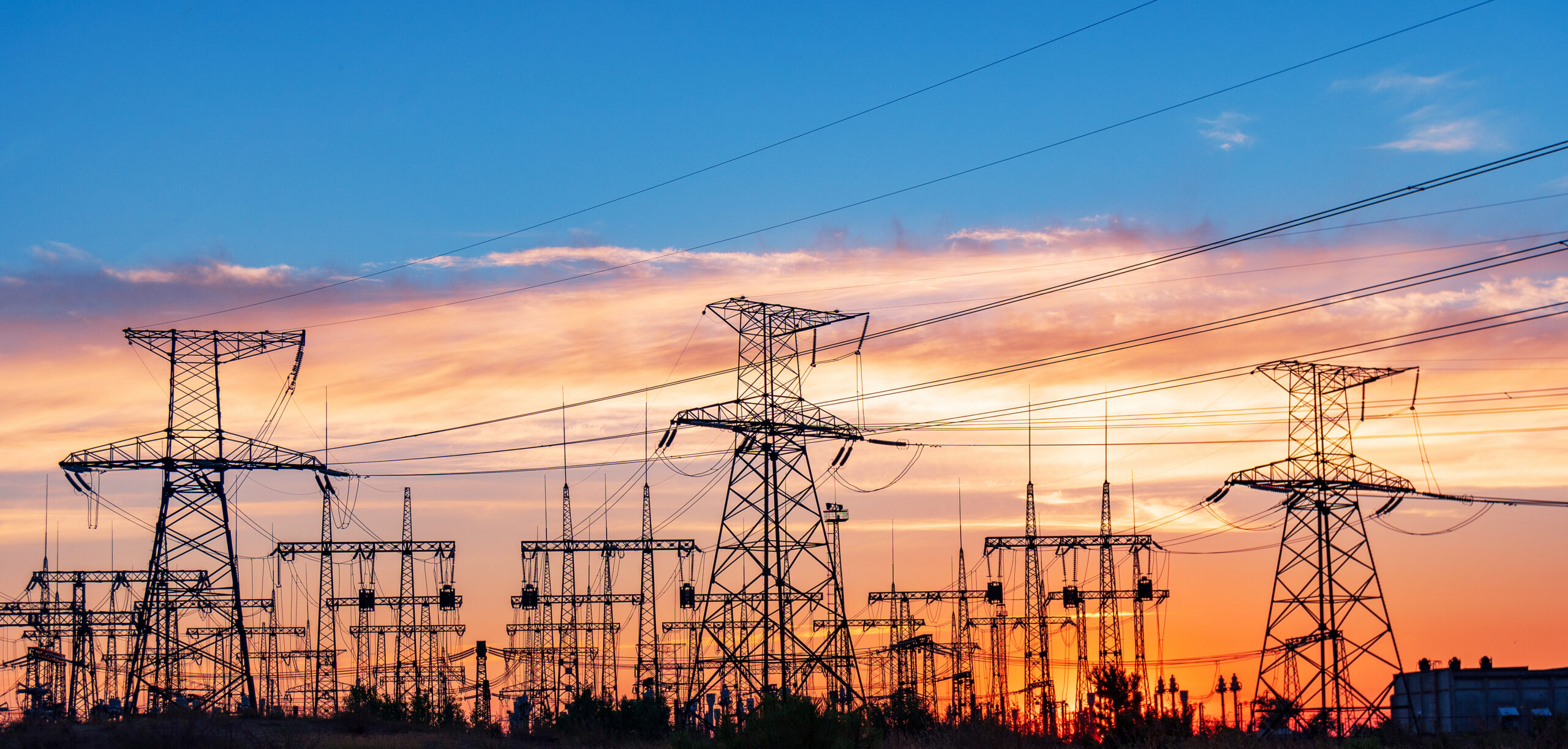
Very few Americans understand how they get their electricity, and even fewer know who — or what — controls the electric system. In fact, when polled by PowerLines, a consumer advocacy group, 60% of respondents admitted that they are “not familiar with the state or local regulatory body that determines their utility bills,” and 9 in 10 respondents “could not correctly name their specific regulatory body.” It is little surprise, then, that 80% of respondents also reported feeling “powerless over how much they were charged for utilities.” And, for the most part, they are right to feel this way.
America’s electric system is a behemoth, composed of not one but three major grids fed by what the Rocky Mountain Institute describes as “a network of several hundred thousand miles of power lines connect[ing] thousands of electric generators to power households and businesses across the contiguous United States.” Often referred to as “the largest machine on Earth,” for much of the 20th century, the nation’s electric system was considered a feat of engineering; it had once seemed unthinkable — impossible, even — to have an electric system capable of serving a country this large — especially absent state control.
Unlike most countries, where public enterprises control the power supply, privately owned companies have always generated and distributed most electricity in the U.S. But electric monopolies quickly took over the market, and by 1932, eight holding companies controlled almost 75% of all privately held utility companies (also known as investor-owned utilities, or IOUs).
As the Great Depression rolled on, though, the American public soured on monopolies, creating room for the Roosevelt administration to push through a series of reforms that aimed to break up the large holding companies and force IOUs to submit to public oversight. Together, these reforms remade the electric system into a series of regulated monopolies, a model that still shapes how we govern utilities today.
For working-class Americans, household energy was spotty and unaffordable long before the AI boom began, but utility bills are up 40% since 2021.
Why Energy Is So Expensive
In a regulated monopoly, the government allows utilities to maintain some of the fundamental aspects of monopoly, including the exclusive right to operate in their designated service territories. In exchange, those utilities submit to a legally enforceable regulatory compact that establishes, among other things, their obligations to ratepayers, standards of “adequate services,” and limits (if any) on disconnecting service. Most importantly, utilities relinquish their ability to independently set rates for their customers. Instead, they are required to present a rate case — essentially, a petition to set prices at a certain level — to the state Public Utility Commission (PUC), which must then approve or deny the case based on whether these proposed rate increases are “just and reasonable” (i.e., needed to ensure adequate and reliable electric service).
And, similar to the right to monopolize in exchange for oversight, in exchange for giving up their price-setting power, the state guarantees utilities a rate of return for building and operating energy infrastructure (e.g., pipes, transmission lines, and generation facilities).
Until the 1970s, regulated monopolies helped — albeit never perfectly — to protect consumers and keep electric rates low. But they also ushered in a utility business model that incentivizes utilities to treat residential consumers not as valued customers but as resources to be exploited. Utilities can recoup operating costs from serving customers, but they generate profit by building and operating infrastructure — which, incidentally, ratepayers also pay for. And because of the formulas that decide how capital expenditures costs are allocated amongst different types of ratepayers, PowerLines estimates that residential customers “could be on the hook for nearly half of planned utility spending in the near future.”
The incentive to pursue plans that maximize infrastructure development has only increased since the mid-1980s. According to a 2024 Roosevelt Institute report, that’s when deregulation set off a fresh wave of utility consolidations that ended in “several hundred independent, local electricity companies” merging into the “roughly 40 energy conglomerates” operating today.
Deregulation also opened the floodgates for private investment firms, and many have flocked to utility conglomerates, drawn by the promise of guaranteed returns. But once vested, these large investors often turn around and pressure companies to extract as much profit as possible from their customers. Perhaps that’s why, while millions of Americans struggled to afford soaring power bills between 2021 and 2024, 110 utility providers reported $186 billion in profit, an analysis from the Energy and Policy Institute found. That means for every $1 customers paid, $0.13 was returned to investors as profit.
The Connection Between Utility Bills and Data Centers
Contrary to popular belief, data centers are neither the reason power bills are rising nor why millions of Americans have suddenly found themselves sitting in the dark, in arrears, and at risk of being disconnected. Nevertheless, data centers are still driving up prices, although rarely for the reasons people think.
Data centers have been operating in the U.S. for decades with little fanfare — probably because, until recently, they had a relatively limited impact on utility bills. However, that is changing with the advent of newer, larger data centers. Compared to existing data centers, these new-generation centers require massive amounts of electricity — so much that the combined energy demand from data centers is expected to nearly double from 2025 to 2028. This is driven largely by plans to build nearly 1,500 data centers, hundreds of which are projected to be the type of enormous “hyperscale”-style data centers needed for generative AI. Each one can require more than 100 megawatts per year, estimated by SOCOMEC to equate to 400,000 electric vehicles operating annually.
Data center energy demands have led to steep increases in wholesale electricity prices, which have no doubt contributed to higher utility bills in many states. But arguably, it’s how utility monopolies have chosen to respond to these demands that has the most potential to drive up utility bills for families. Giving data centers power will require utility providers to make enormous upgrades to the existing power grid, often beyond the substantial investments many have begun to undertake to “harden” the grid against climate change and extreme weather.
In fact, the data center boom gives opportunities for utility monopolies to accrue substantial, even unprecedented profits — depending on how much capital investment they can get PUCs to approve — at a time when renewable energy threatens to undercut their margins. Adopting renewable energy sources often leads to lower bills for households. So, utility monopolies have real incentives to not simply support data centers but also to rely on fossil fuels — rather than renewable energy — to power them.
New-generation data centers require massive amounts of electricity — so much that the combined energy demand from data centers is expected to nearly double from 2025 to 2028.
The Impact of Energy Insecurity
Of course, for working-class Americans, household energy was spotty and unaffordable long before the AI boom began. But utility bills are up 40% since 2021; price increases for both electricity and gas are outpacing the rate of inflation; and, according to National Energy Assistance Directors Association estimates, at the end of 2025, 1 in 6 American households were behind on their utility bills. Utility shutoffs have also spiraled out of control. In 2024, the first year when utilities providers were required to make data about shutoffs publicly available, 13.5 million disconnections from utility service due to nonpayment were recorded, millions more than experts had previously anticipated.
Yet, these new mainstream conversations about affordability and energy insecurity rarely reflect the depth or breadth of what is often a dangerous and humiliating experience, particularly for mothers. As one single mother of five shared in Diana Hernández and Jennifer Laird’s 2025 book Powerless: The People’s Struggle for Energy: “One of my sons had holes in his shoes. I know he needed shoes…I know if I don’t pay the light bill, then we ain’t gonna have no lights. I have done it before. I have let my child go without, where he had holes, and I had to patch it up…We had to do what we had to do.”

at some point in the last year.
Energy insecurity has serious physical and mental consequences, particularly for mothers. Of the nearly 1,800 women who informed Jeremiah Program’s June 2026 report with the Urban Institute 58% had not been able to pay the full cost of a utility bill at some point in the past year. (A “smaller share” — 30% — had experienced a utility shutoff in the past 12 months.) It’s very likely that most, if not all, of these women were also among the 85% of respondents who reported experiencing food insecurity.
Nevertheless, even with JP’s support, energy insecurity can make it harder for mothers to achieve the financial stability they are working toward so diligently. One study found that households that paid 10% or more of their income in energy bills were at 150 to 200% greater risk of transitioning into or extending “the duration of economic poverty over a two-year timeframe” compared to households that had similar incomes but were not energy burdened. As one mother put it in Powerless, “Sometimes I have to make a choice. It’s either pay the rent or pay the Con Ed bill, put food in the kids’ mouth, [or] make it to work.”
What We Can Do
Spurred by voter concerns, politicians have begun to implement proposals designed to lower utility bills and stabilize energy prices. For instance, current New Jersey Governor Mikie Sherrill recently signed three bills that the state projects will save ratepayers $1 billion annually. Montana Governor Greg Gianforte, Wyoming Governor Mark Gordon, and Missouri Governor Mike Kehoe have signed onto the White House’s Ratepayer Protection Pledge, an agreement among state officials, electric utilities, and tech companies to hold data center developers responsible for the cost of new electric generation and grid infrastructure.
These policies are emblematic of the types of interventions many states have implemented to drive down energy bills. They aim to reform utility incentives to reduce “wasteful” spending and unnecessary infrastructure investments and encourage utilities to adopt lower-cost “smart grid” technology to help meet energy demands. They also seek to create a new rate structure and ratepayer class for data centers and pursue community benefit agreements that hold developers financially responsible for their impact on the grid.
These measures are very promising — or could be, if they are strictly enforced. But already, there are signs that Americans may prefer immediate relief — usually in the form of rate “freezes” or moratoriums — over policies that address the roots of the problem but may take longer to produce an effect, such as legislation that shifts utility business models, centralizes management of the grid, or subjects Big Tech companies to more public oversight. While measures like moratoriums may provide immediate relief, they do very little to reduce utility bills long term and could ultimately result in higher prices — if, for instance, utilities delay necessary maintenance until after the moratorium ends.
Still, there may be a way for working-class families to demand immediate relief and push for structural reform: a consumer movement. Led by groups like PowerLines, ratepayers in states such as Georgia and Pennsylvania have begun organizing not only to influence PUC elections but also to pressure PUCs to be more aggressive in protecting the public interest during rate cases. More fundamentally, these organizations educate local communities about how utilities are run and regulated, so more people understand the power they have to influence utility bills.
Given how hard utilities have fought at any whiff of reform, this type of collective organizing is probably the only way Americans will see any lasting change in utility prices — no matter how many data centers are built.
Rhiana Gunn-Wright, an architect of the Green New Deal, is the former Director of Climate Policy at the Roosevelt Institute. Much of her work focuses on the intersection between economic policy, climate policy, and racial justice.

Find this story and more in our magazine, Imagine!
When you design policies and structures that actually work for a single mom navigating child care, employment, and college simultaneously, you’ve built systems that work for everyone.
Those are the stories we’re telling in this fourth issue of Imagine.
Did this story resonate with you? A monthly gift goes further to support JP families.