
What Single Mothers Already Know About October 2026 and Beyond
The CEOs of the Washington Area Women’s Foundation and Jeremiah Program team up to sound the alarm about how fall 2026’s SNAP changes will impact single-mother families.
Ask a single mother what she is watching this fall, and she will not say the midterms. She will say October because that is when states will be asked to do more with less, and families will be left to absorb the difference. That is when the ground shifts.

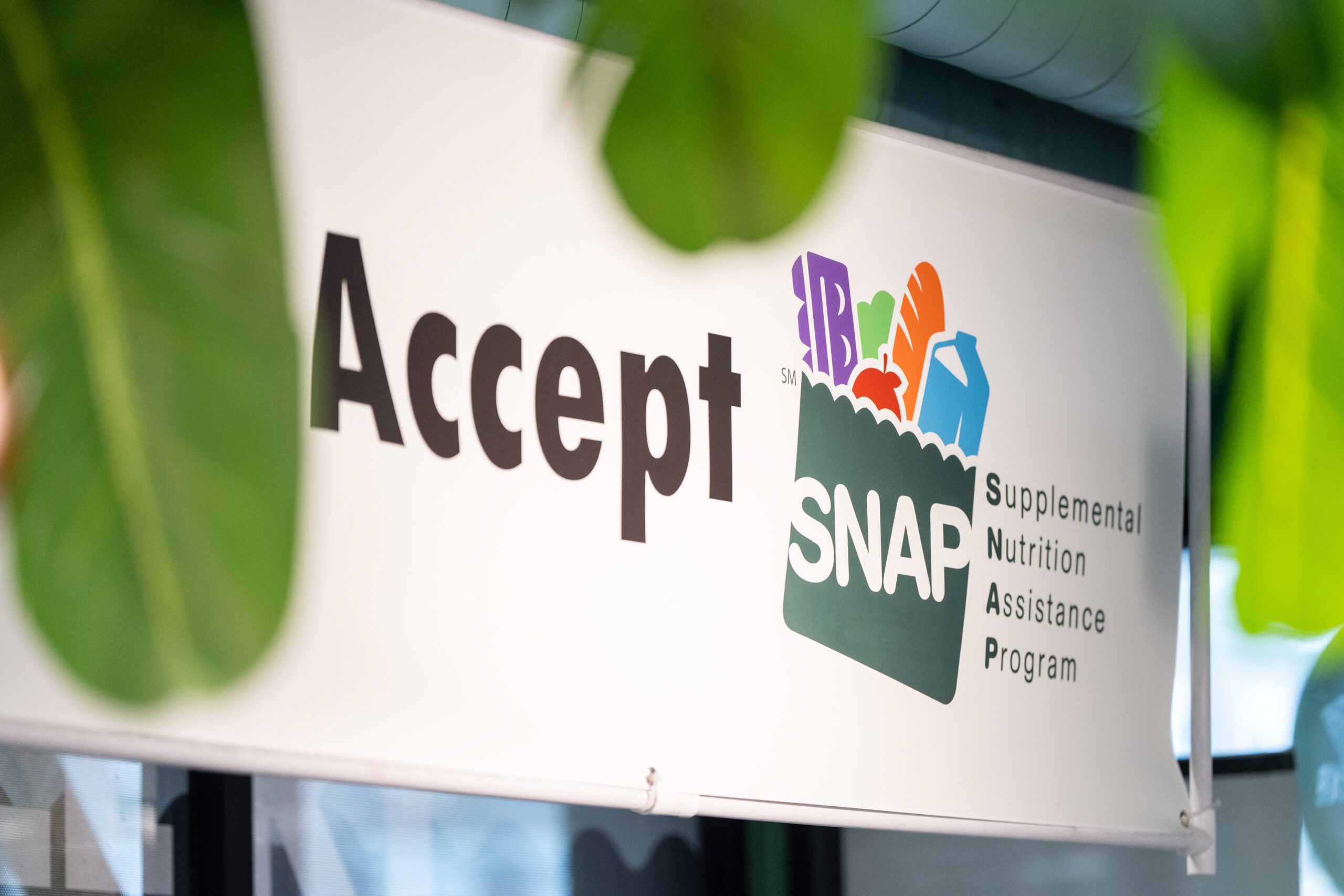
Beginning October 1, states become responsible for 75% of the cost of administering SNAP, up from the half they have paid since the program began. Pew Charitable Trusts calls it the biggest structural change to the program in more than 60 years. Three months later, on January 1, 2027, 44 states must begin making documented work hours a condition of Medicaid eligibility for adults who are part of a new expansion group. Neither change requires a single new vote in Washington. Both land in statehouses, on governors’ desks, and inside county agencies that are already stretched.
The real test of these changes will not be how states implement them but how families experience them. We know because the two of us come at this from opposite ends of the same problem. One of us runs residential campuses in nine cities, working directly with mothers who are raising children while finishing college degrees. The other runs a community foundation that has moved more than $17 million to over 215 organizations across the Washington, D.C., region since 1998. Direct programs on one side, grantmaking on the other. We are writing together because we have arrived at the same conclusion from different directions, and it is not a comfortable one:
Neither a program nor a grant is built to absorb what is about to move.
Who Actually Carries It
We want to be precise about who takes the weight. Mothers maintain 80% of one-parent family groups in this country. They are the households with the least room to absorb anything.
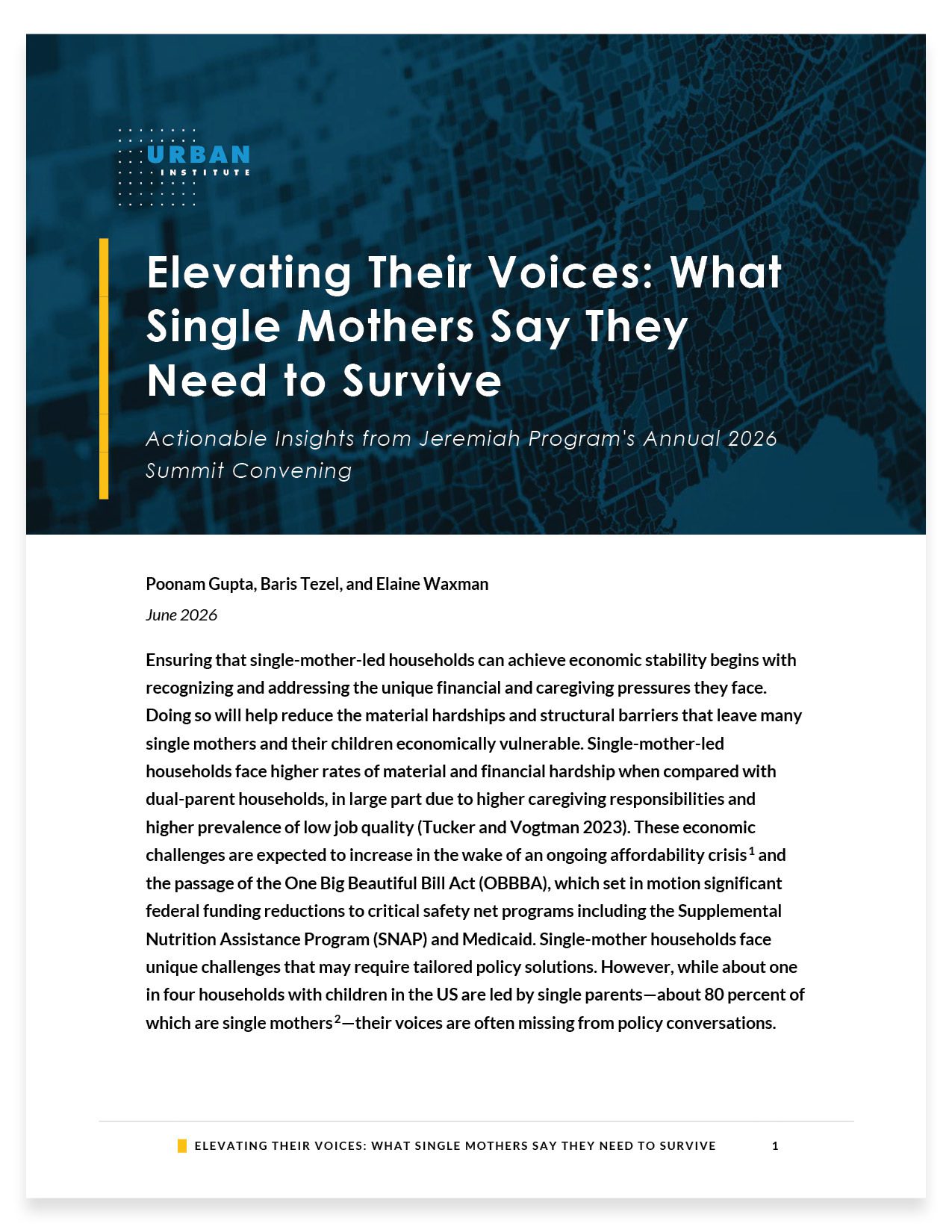
We have the receipts. In March 2026, Jeremiah Program (JP) surveyed nearly 1,800 single mothers across 43 states. In June, in partnership with the Urban Institute, we published what they told us in Elevating Their Voices: What Single Mothers Say They Need to Survive. Eighty-five percent had experienced food insecurity in the past year. Ninety-seven percent reported a housing hardship. Sixty-four percent had quit a job, turned one down, or significantly changed their work because they could not solve child care.
Read those numbers again with October in mind. This is not a population with slack in the system.
Widening, Not Narrowing
There is a persistent assumption that centering single mothers is a niche argument. It is the opposite. When you design for a mother who is working and finishing a degree with a toddler at home, you have solved for the hardest version of the affordability problem. Everything downstream gets easier. You have brought in children. You have brought in child care, housing, food, health coverage, and every question about who actually gets to move up in this country.
That is a design principle before it is a moral one.
From the philanthropic side, it is also a portfolio strategy. A funder who underwrites the hardest case is investing in results that travel, which is why the Women’s Foundation partners with degree- and certificate-granting institutions through our HERizon Fund.
We always tell people to make a plan to vote. For a single mother, that plan has three parts nobody mentions: a child care plan, a transportation plan, and a dinner plan.
New People on the Field
Something changed in the last six months, and it is the part we did not expect.
When JP opened its annual Summit Weekend to a national virtual audience and partnered with the Urban Institute on our survey, the response crossed 43 states. Then came an ask to a room of chief executives, most of whom did not know each other: Host a conversation in your city and help grow the number of mothers whose voices get counted. Every one of them said yes.
They are not in the same business. A community foundation in Washington, D.C. Direct-service organizations in Chicago, Dallas, Detroit, Charleston, Jackson, Los Angeles, Memphis, Minneapolis, and Philadelphia, to name a few. Different sectors, different constituencies, one organizing frame. That is a coalition table where there was none in January, and it is being built precisely where the decisions have moved: to the states.
The goal is 30,000 single mothers counted by 2030, in time for a U.S. Census that determines how $2.8 trillion in federal funding gets allocated. Ten thousand in 2027. Twenty thousand in 2028. JP’s survey of single moms is an annual record, not a one-time report, so that the next time someone in a statehouse decides what a family can live on, the answer is already documented.
a housing hardship. Sixty-four percent had quit a job,
turned one down, or significantly changed their
work because they could not solve child care.
Voting Is Food Money
We always tell people to make a plan to vote. For a single mother, that plan has three parts nobody mentions: a child care plan, a transportation plan, and a dinner plan. That is why JP campuses are organizing rides, child care coverage, and food around early voting this fall rather than simply reminding people of a date.
The deeper point is the framing: Decisions about food money for this coming winter are being made right now, in rooms most people do not know exist, by officials whose names most voters could not produce on demand. Voter turnout in midterm years runs near 46%. That gap is not apathy. It is a scheduling problem layered on top of an information problem, and both are solvable.
So here is the ask: Read JP’s report. If you fund in this space, look at where your dollars land after October and ask whether the organizations you support can carry a cost shift they did not budget for. And if you lead an organization that touches these families, come sit at the table while it is still being built.
Nobody is coming to make this easier. That has never been the assignment.
Dr. Tamara Wilds Lawson serves as President and CEO of the Washington Area Women’s Foundation, a community-supported foundation that invests in the power of women and girls of color in the Washington, D.C., region.
Chastity Lord serves as President and CEO of Jeremiah Program.

Find this story and more in our magazine, Imagine!
When you design policies and structures that actually work for a single mom navigating child care, employment, and college simultaneously, you’ve built systems that work for everyone.
Those are the stories we’re telling in this fourth issue of Imagine.
Did this story resonate with you? A monthly gift goes further to support JP families.